

Corporate Tax Filing Deadlines You Can’t Miss
Key dates for T1 general returns, corporate T2 filings, and GST/HST quarterly submissions. Missing a deadline costs you in penalties.
Read MoreHome office, vehicle expenses, professional development, and equipment purchases. We’ll show you what you can claim and how to document it properly.

Most business owners claim about 60% of the deductions they’re actually entitled to. That’s not because they’re careless — it’s because tax rules are complicated and the CRA doesn’t advertise what you can write off. You’ve probably heard about the basics like office rent and equipment. But there are dozens of legitimate expenses that get overlooked every year.
The difference between knowing about these deductions and not knowing about them? It’s easily thousands of dollars back in your pocket. We’re talking real money that reduces your taxable income. The challenge isn’t whether these expenses are deductible — the CRA’s rules are clear on that. The real issue is documentation. You need to know what qualifies, how to categorize it, and what records the CRA expects to see if they ever audit you.

If you work from home, you’ve got a legitimate deduction waiting for you. There are two methods the CRA accepts: the simplified method and the detailed method. Most people don’t realize this, so they either claim nothing or they guess at percentages.
The simplified method is straightforward — you claim $2 per square foot of dedicated workspace. If you’ve got a 200-square-foot home office, that’s $400 per year. It’s not huge, but it’s completely defensible with minimal documentation. You just need to show the square footage and that it’s genuinely used for work.
The detailed method? That’s where serious deductions happen. You calculate what percentage of your home is your office, then claim that same percentage of your entire home’s expenses. Mortgage interest (or rent), utilities, property tax, insurance, maintenance — all proportional to your office space. If your office is 15% of your home and your annual utilities are $2,000, you’re claiming $300 right there. Add property tax, maintenance, insurance, and you’re looking at thousands in deductions. The catch: you need meticulous records showing square footage, expense receipts, and utility bills for at least 3-5 years if audited.


Vehicle deductions trip up a lot of business owners because the rules feel restrictive. You can’t just claim your entire vehicle expense — only the portion used for business. And you’ve got to choose your method upfront and stick with it throughout the year.
The mileage method is simpler for most people. In 2026, the CRA standard rate is around 68 cents per kilometer for business driving. You keep a mileage log (even a simple spreadsheet works) showing business kilometers versus personal kilometers. Drove to a client meeting? 50 km. That’s $34 in deductions right there. Doesn’t sound like much per trip, but if you’re doing this regularly, it adds up to thousands per year.
The actual cost method requires more documentation but often generates larger deductions. You track everything: fuel, maintenance, insurance, registration, depreciation. Then you calculate the percentage that’s business use and claim that portion. If you spend $8,000 per year on vehicle expenses and 70% is business use, you’re claiming $5,600. The tricky part? You need fuel receipts, service invoices, insurance documents, and a detailed mileage log to back up that 70% business use figure. The CRA will ask for all of it if they audit.
Training isn’t optional anymore in most fields. It’s also deductible — but not always in the way you’d think. The CRA allows you to deduct courses and training that maintain or upgrade your professional skills. The keyword here is “maintain or upgrade.” You can’t deduct training that qualifies you for a completely new profession.
Here’s what’s clearly deductible: industry certification courses, software training relevant to your work, professional conferences, workshops on topics directly related to your business. A copywriter taking an advanced SEO course? Absolutely deductible. A web designer attending a UX design conference? Yes. That online bookkeeping certification you completed? Deductible. These aren’t just nice-to-haves — they’re business expenses that keep your skills sharp and your business competitive.
Include the full cost: tuition, registration fees, materials, even travel if the conference is out of town. If you flew to Toronto for a three-day digital marketing summit, you can claim the course fee, your flight, hotel, and meals while you’re there. Many business owners miss this because they think professional development is a personal expense. It’s not — it’s a business investment that the CRA recognizes.


Equipment purchases confuse a lot of business owners because the tax treatment depends on the cost. For items under $500, you can usually expense them fully in the year you buy them. That new office chair, the external hard drive, the software subscription — all get deducted that year.
For bigger purchases, things get more complex. A $3,000 laptop or a $5,000 printer doesn’t get fully deducted in one year. Instead, you depreciate it over several years. The CRA has capital cost allowance (CCA) rates for different asset classes. Computer equipment is typically depreciated at 55% per year using the declining balance method. A $3,000 computer gives you roughly $1,650 in deductions year one, then $743 year two, and so on. It’s a slower deduction, but you still get the benefit over time.
Don’t forget software either. Annual software subscriptions (Quickbooks, Adobe Creative Suite, Canva Pro) are fully deductible in the year you pay them. They’re not capital assets — they’re business expenses. One client we worked with was claiming these manually each month. When they realized they could just claim the full annual cost upfront, they found they were missing deductions from previous years and filed adjustments to recover thousands.
You can claim 50% of meal expenses when you’re discussing business with a client or colleague. That lunch meeting where you pitched your services? 50% is deductible. Keep the receipt and a note about who you met with and the business purpose. Many people don’t claim these because they think the rules are too strict — they’re not.
Professional liability insurance, business interruption insurance, trade licenses, business registration fees — all deductible. You’re protecting your business and meeting legal requirements. These are 100% business expenses. Don’t bury them in miscellaneous — claim them explicitly so they’re clearly defensible if audited.
Website hosting, domain registration, social media ads, printed materials, business cards, promotional items — all deductible. Some people claim these. Many don’t realize how broad this category is. That $50/month for your website? That’s $600 per year you might not be claiming.
Tax preparation, bookkeeping services, legal advice related to your business — all deductible. The irony is that people often skip proper accounting to save money, then miss deductions that cost them far more. Getting professional help to identify deductions often pays for itself many times over.
Monthly account fees on your business bank account, interest on business loans, credit card processing fees — all deductible. These are usually small individually but add up. If you’re paying $15/month in fees and 2% interest on a business loan, that’s $2,000+ per year in deductions.
Pens, paper, ink cartridges, envelopes, shipping costs — all fully deductible. These feel small, but they add up. Spending $100/month on supplies? That’s $1,200 annually. Keep receipts from office supply stores and shipping companies.
Claiming a deduction and proving it are two different things. The CRA requires documentation that shows you actually incurred the expense and that it was business-related. For most deductions, a receipt or invoice is enough. For bigger or more complex items, you need more.
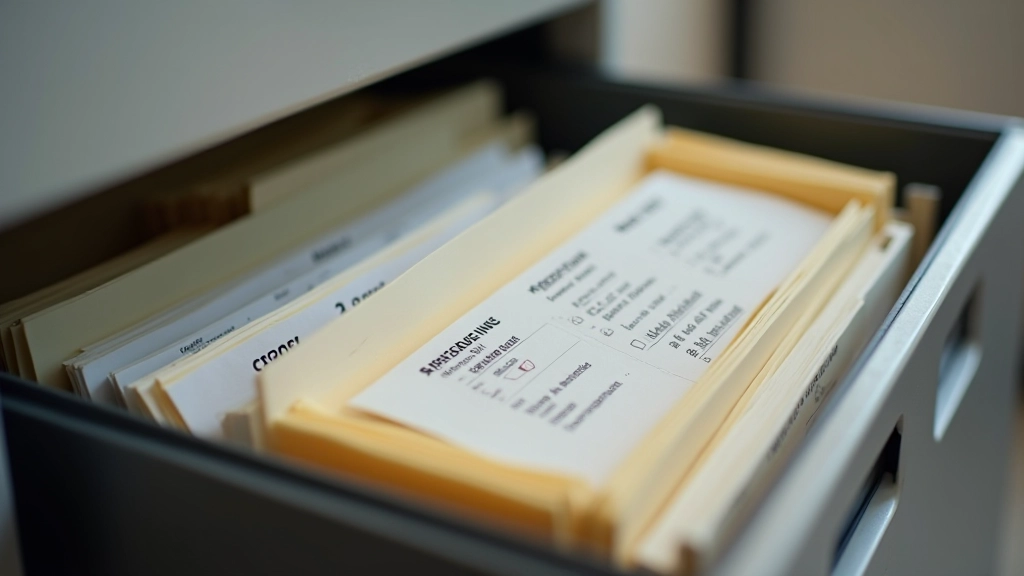
Keep digital copies of everything. A good system: create folders by expense category (vehicles, meals, professional development, equipment) and scan or photograph receipts as you get them. For regular expenses like utilities or insurance, keep the annual statement or bill. For mileage, maintain a log showing dates, destinations, and kilometers. For home office, photograph your workspace and keep the square footage documentation.
The CRA’s standard is that records must be kept for six years from the year they relate to. That means a 2026 receipt needs to be kept until at least December 31, 2032. Digital storage is fine as long as it’s reliable. Cloud backup is actually better than paper because it’s harder to lose.
One more thing: your deductions need to be reasonable. If you’re claiming $50,000 in vehicle expenses but your business only earned $60,000, that’ll trigger questions. The CRA looks at whether deductions are consistent with your income level and industry. Stay within reasonable ranges and you’ll be fine.
Tax deductions aren’t about being creative — they’re about knowing what the CRA allows and documenting it properly. The deductions we’ve covered here aren’t gray areas or risky moves. They’re legitimate, well-established deductions that the CRA accepts every day.
The real issue isn’t whether these deductions exist. It’s that most business owners don’t have a system to capture them. You make a home office deduction once, then forget about it. You spend on professional development but don’t keep receipts. You pay business insurance but claim it as miscellaneous instead of as a specific line item.
Start with one category from this article. If you work from home, calculate what your detailed home office deduction should be. If you use your vehicle for business, start a mileage log this week. If you’ve taken any professional courses, gather those receipts. Small steps create real savings. And real savings compound year after year.
Missing even two or three of these deductions costs you hundreds annually. The system here takes less than an hour to set up and then maintains itself.
This article is for informational purposes and reflects current CRA rules as of 2026. Tax laws change regularly, and specific situations vary. The deductions described here are general guidelines — your personal situation may have different rules or restrictions. Before claiming deductions, especially large ones, we recommend consulting with a qualified tax accountant or CRA resource who can review your specific circumstances. Nothing in this article constitutes tax advice or replaces professional tax consultation.